Today was a sad and wonderful day for me. At 4:30PM we locked the door at South Coast Antiques & Gallery on Government Street in down town Ocean Springs, Mississippi and it was over. After a little more than five years we closed our door to the public forever at this location.
It was and is so sad for me. No matter how much I complained and jumped up and down an yelled at tractor trailers parking in front of my shop to make deliveries to the bars and restaurants, when I was the only shop open on Mondays on that part of Government, I will still miss it so very, very much.
It is wonderful in that this will be leading to a new and different future that I surly believe will be every bit as exciting as the last five years. We will be reopening South Coast Antiques on approximately 2 April at Centuries Antique Mall over in the neighboring town of D'Iberville. It is located at 4030 Suzanne Dr, DIberville, MS 39540
Showing posts with label Gallery. Show all posts
Showing posts with label Gallery. Show all posts
Saturday, March 17, 2012

Sunday, February 12, 2012
Went to an Estate Sale Today
We went to an estate sale this morning and picked up a pretty nice late world war two Japanese shin guntō Officers sword type 3 with what looks to be a wooden surrender chit. We also found a really cool larger than life size(46 inches tall) bust of a woman that is done in and idealized Victorian era Renascence style that just reeks of quality. This massive sculpture is just awesome I must say. The only thing about it is that it is made of fiber glass and is not circa 1870's-80's like it looks, but is more than likely late 1970's or 80's! It is a spectacular piece that was made as either a garden ornament or a prop of some type. Either way it is a very appealing piece and will probably end up in my garden. This piece will be on display at South Coast Antiques & Gallery for a while before it will be moved to my garden, so if you want to stop by and see it, it will be on view.
 |
| Idealized Victorian era Renascence Style Bust |
Sunday, January 22, 2012
Northwood Alaska Blue Opalescent Glass Sugar & Creamer and Unkown Double Hobstar Bowl
I had a young woman come into South Coast Antiques & Gallery the other day and sell me some really nice blue opalescent glass pieces. She had a sugar bowl and creamer that are in the northwood pattern known as "Alaska". The "Alaska" pattern was made by the Northwood Glass Company and dates between 1898-1903. This is a pattern that I was not familiar with. I went online and typed into the Google search engine, "blue opalescent sugar bowl" and was suprised to find almost immeadiatly a thumbnail image of 26 pieces that had been previously been sold.
I find this pattern truly beautiful and in my opinion it epitomizes the high Victorian tastes of the turn of the century. The feet on these pieces are what are known as "Lion's Legs".
 |
| Northwood Alaska Blue Opalescent Glass Sugar & Creamer Circa 1898-1903 |
This site told me who made my pieces and what pattern this was. I did a bit of checking around to verify that this was correct information, beacause contary to popular belief just because it is on the internet does not necessarily make it correct information.
I then looked around online and was suprised at how easy it is to fimd pieces avalable and at moderatly reasonable prices.
 |
| Northwood Alaska Blue Opalescent Glass Creamer |
I find this pattern truly beautiful and in my opinion it epitomizes the high Victorian tastes of the turn of the century. The feet on these pieces are what are known as "Lion's Legs".
Please note that these pieces were photographed before they were cleaned. There is some dust and a small amount of dirt that shows up in the images. What looks like dirt also in the images is actually traces of what was once gilding on the edges.
 |
| Bottom detail of Northwood Alaska Blue Opalescent Glass Sugar Bowl |
 |
| Blue Opalescent Glass Bowl Double Hobstar Design Eva |
There was a third piece of glass, a bowl in the same blue opalescent type of glass. This piece has benn driving me crazy. I have looked in all my books and found nothing. I have looked at a million pieces of glass online and not found anything at all in this pattern. This pattern has a double "hobstar" pattern that I just can not track down. Until someone can show me what it really is called I will refer to it as "Double Hobstar Eva"
 |
| Side Detail Double Hobstar Eva Bowl |
This is a really great looking piece of glass that just radiates an almost magical opalescent inner glow. I am very curious as to who made this one, when, and what the pattern is called, if anything. Many patterns did not originally have names they were just given number designations such as pattern number 143. Many times the names were added to the pattern because that was just what the collectors started calling a specific pattern.
If anyone has any information about this piece please let me know.
UPDATE: I was told by PatternGlass.Com, That this bowl is a one off piece and was not part of a pattern set. That is why I can not find a pattern name for it. So I guess I will call it the "Double Hobstar Eva" Bowl. Many thanks to PatternGlass.Com!
Thursday, January 5, 2012
A Few New Photos and a Frederic Remington Bronze at South Coast Antiques & Gallery
Here are a few new images of the shop that I took today.


This case has a variety of things such as 19th century spelter figurines, a 1920's red flapper's box camera, 1870 top hat, Pre WWII boxed childs cutlery set, Pair of Victorian ivory paintings, Bristol ware glass, Santa Clara blackware pottery, Large sterling silver oval vanity mirror, assorted antique ivory jewelry and ornaments, including an African chiefs horn. Also included are Japanese geisha doll, squash blossom necklace, a Harrach glass and gilt vase. Tiffany Favrile footed glass salt dip, Sterling Coach chain and lock necklace, 1860's gold and garnet necklace. The bottom shelf has vintage Shearwater figurines which a very rare cabin shaped cookie jar, Fred Press original plaster art deco bust, A matched set of three Sea foam blue victorian opaline ware containers, Black Victorian mourning fan, Large niello sterling Siam belt, and a small grouping of early William Spratling jewelry, plus many other items.

In this case we have a very rare circa 1870's Ames sword company sign, a pre WWI Bavarian reservist regimental stein, early 1800s Ottoman Empire inlaid blunderbuss, a bone mounted late Mejii dagger, a Malaysian watered steel kris, African trade spear point, Spanish bone handed bull fighting sword, a shamshir, Spanish 1820s uprising briquet sword, very early Dragoon sword, 1840s single shot percussion pistol, a WWII Japanese NCO's sword, a WWII Japanese officer's sword, rare pre-kerosene smugglers black out lantern, Austrian pioneers sword from the 1820s, 1840s newspapers masthead American eagle printers block, 19th century Persian tile, an image of an Italian Alpine trooper circa 1910, small bugle, early 1900s handcuffs, African dagger, German guild processional axe, WWII aircraft gun camera, a Spanish shipwreck coin and a very large Remington bronze mountain man sculpture.

This handy little corner cabinet has on top an Indian painted water bottle with folkloric scenes, and inside the case is a large Fenton art glass vase by Robert Barber, a white bronze Coptic cross with hand painted inset panels, A Victorian red on crystal basket, A Rosie O'Neal Kewpie cup, A scarce paper thin milk glass hand enamel painted beer stein circa 1820's, A hand painted wooden Russian peasant mug by Michael W, Moses, and a early 1900's creamware Mettlach, German stein, and on the bottom shelf is a mid 1950's Murano glass bowl. Next to the case is a French provincial style table from the turn of the century. On this table is a medium sized Persian samovar, a Japanesque American made caster set by Reed & Barton, An Egyptian motif oil lamp, a moss rose Japanese made 1950's coffee table set, a Japanese made lustreware bowl, and a set of circa 1910 Royal Doulton plate and bowls. Underneath the table is a 1930's fan and a coal fueled iron, a common flat iron, a tall reproduction fireplace trivet, and a vintage cooper tea pot. off to the side we see a early 1900's ships wheel and WWII liberty ship binnacle with compass and a matching set of craftsman leaded glass door panels circa 1915. Well these are a few of the things that we currently have in stock at South Coast Antiques & Gallery!
Now for the big news. We have acquired a wonderful extremely fine casting of a Frederic Remington bronze. This wok of art is 28½ inches tall and is called the "Mountain Man". This bronze sculpture is one of the finest quality Remington bronzes that we have ever seen! The detail is amazing. Every detail on this piece is just incredible. Everything from the liver sulfur patina to the exquisite mirror polished French slate base shows this to be a truly superior work of art. |
| "Mountain Man" by Frederic Remington |
Wednesday, December 21, 2011
We at South Coast Antique & Gallery Wish You All a Very Merry Christmas!

Do Not Forget about the Christmas Dr.Who,
on 25 December 2011!
Monday, November 7, 2011
Glenn Edward Miller at the 2011 Peter Anderson Art Festival in Ocean Springs,MS
 Over the weekend past we had the annual Peter Anderson art festival here in Ocean Springs, Mississippi,. I had the opportunity to go out and spend a bit of time looking around. I must admit that There seemed to be a little more arts and crafts this year than last year. I did not see as many factory made items and non arts and craft related merchandise this year.
 I spent a few moments talking with Glenn Edward Miller at his prominently located display. Mr. Miller is very well known and loved local artist that is best known for his vibrant depictions of local Gulf Coast sites. Glenn E. Miller is a life time resident of the Gulf Coast. He studied art and went to collage in New Orleans. For many years Mr. Miller was the man that raised and lowered the Back Bay drawbridge. When not operating the bridge he worked on many of his life sketches and studies.
Our shop South Coast Antiques & Gallery is located where the Old Henrietta's restaurant was located and was the subject for a number of Glenn Millers hand tinted etchings. One that I have had access to was titled "Henrietta's, the Hub of the Town".
Glenn Miller's art is the kind of thing that really appeals to anyone that has a love for the local area. Sadly, many of the buildings that Glenn has done etchings of have been destroyed by time, Katrina, and many by the desire to reshape Ocean Springs into a New Orleans type one stop party destination. A very sad thing in my opinion.

Sunday, July 10, 2011
Collecting Cut Out Coins and Cut Out Coin Jewelry
 | ||
| A Fine Example of Cut Out Coin Jewelry. A Pin Crafted from a 1862 Swiss Silver Coin |
These cut out coins are also collected by some coin collectors of exonuma, along with sweetheart tokens, which are in the same category. Modern cut outs can be enhanced with gold plated accents
Cutting coins is difficult due to the thickness of the material, compared to cutting thinner sheet silver and the additional harness of the alloyed silver also increases the chance of the very fine blade of the saw snapping. Coin fineness can vary from 90% pure down to 72% pure. The more alloy, the harder the material and the more difficult it is to cut as you increase thickness.
An experienced eye and a skilled craftsman is required for this difficult work. The craftsman must plan where the cuts will be made and plan out where relief holes will be drilled for each set of cuts. He must decide not only where to cut, but how the overall removal will enhance the beauty of the final work.
The holes drilled must be only slightly larger than the saw blade because the blade must be threaded through the hole before being reattached to the saw frame. The blade is also about the size of a thick hair and very prone to snapping if even the slightest twisting or uneven pressure is made. One source indicated that 20 to 40 holes must be drilled and the same number of blade inserts and connections to the frame are made. The most intricate pieces may take over 100 to 150 cuts to complete the work. Each piece takes hours to finish and the most complex might take up to 15 hours from start to finish, in cases where full legends and date are cut out.. The coin is then polished. Then any soldering for a pin or bail done and a final clean up and polish to complete the work.
We are more familiar with pieces cut out in the late 1960s and early 1970s from craft fairs and made sometimes by itinerant hippies. Although they produced some good work, they were not always masterpieces of advanced craftsmen. In fact, they often didn’t have an aded pin or bail soldered on and a simple cord was used for wear.
Look for pieces with intricate cut outs. For example, there are a lot of letters and numbers are cut out, and soldered on decorative border and a good quality pin or bail for wearing. It’s not always about age and some new pieces are so intricate and involved, they are more expensive than a vintage item. Newer pieces may also have gold plating in areas for accents. Watch out for cast copies of good pieces masquerading as originals. You will see a line around the rim that shows it was cast and not a coin as well as a blurriness deep within the cutouts around the letters. Generally these inexpensive copies are made of pewter or lead.
Remember, attention to detail will save you a lot of money and disappointment no matter what you collect. Buy what you like and don’t worry too much about buying for investment. The great thing about cut out coins is that you can wear them and they make a great fashion statement about your collecting.
EXAMPLES Available at South Coast Antiques & Gallery
U.S. silver dollar die cut by machine note lack of soldering (see comments section)
 | |||||
| Cut Out 1920's U.S. Morgan Silver Dollar |
 |
| 1920's U.S. Morgan Silver Dollar Fashioned into a Necklace with Sterling Beads and Light Blue Dragon Skin Agate. |
A Dutch sweetheart pin, probably made for American military members in WWII, circa late war.
 | |||||
| Crafted From Dutch Silver Coins |
Guatemala coin bracelet made up of alternate cut out coins from the late 1800's.
This work probably dates in the 1920's or 30's.


 |
| Tiny Silver 1 Real Coins From Guatemala |
UPDATE 1 May 1014: Buyers beware of laser cut coins being sold as hand cut coins in the past few years. The coin is scanned and then a computer guided laser cuts out designated areas. They are pretty and they started life as a coin, but don't fit the definition of hand-made by any means. Also read the comment section below about a discussion about die-cut coins. Also note our previous photos below of a base metal cast pseudo coin. The lead ones are soft and easily bent. The fact that they are silver plated can lead the unwary to believe they are coin silver.
Fake Bahamas cut out coin made of cast lead.of no actual value.


Monday, June 27, 2011
Billy the Kid $2.3 million a New Picture Sells for $3,890,500!
As I posted on my May 21, 2011 post, The world renowned Tintype image of Billy the Kid (William Bonney)was auctioned off at Brian Lebel's 22nd Annual Old West Show & Auction in Colorado. It was originally estimated to sale for between $300,000 to $400,000.
Well, it sold on Saturday 25, 2011 for $2.3 million! The good news is that it will be staying here in the United States. There were from my understanding a number of bidders form other countries that were interested also. One would think that this would be the worlds most expensive photograph, but it is far from being so. It is a bit difficult to believe, but there are three other photographic images that have sold for more.

 Edward Steichen, The Pond-Moonlight (1904),$2,928,000, February 2006, Sotheby's New York auction.
The Billy the Kid image may be the most expensive tintype ever sold though.
Here is a List of the 16 most expensive photographs.
Please note that none of these images are currently available for viewing at South Coast Antiques & Gallery.
Well, it sold on Saturday 25, 2011 for $2.3 million! The good news is that it will be staying here in the United States. There were from my understanding a number of bidders form other countries that were interested also. One would think that this would be the worlds most expensive photograph, but it is far from being so. It is a bit difficult to believe, but there are three other photographic images that have sold for more.

Cindy Sherman, Untitled #96 (1981), $3,890,500, May 2011, Christie's New York

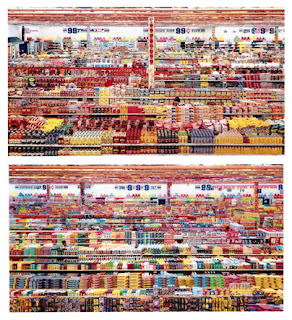
Andreas Gursky, 99 Cent II Diptychon (2001), $3,346,456, February 2007

The Billy the Kid image may be the most expensive tintype ever sold though.
Here is a List of the 16 most expensive photographs.
Please note that none of these images are currently available for viewing at South Coast Antiques & Gallery.
Subscribe to:
Posts (Atom)